






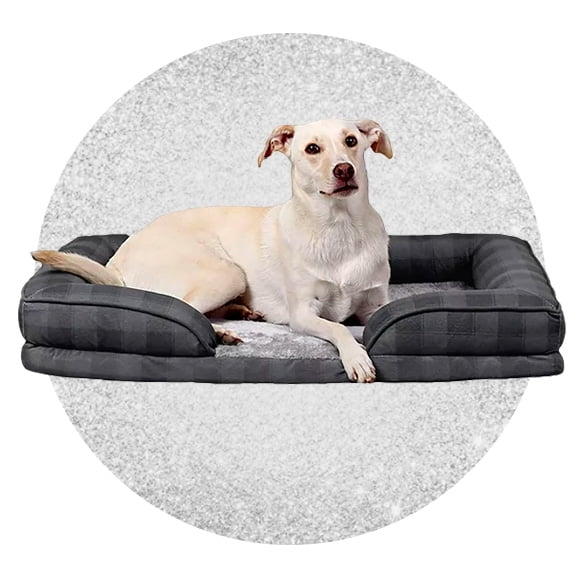



Dog beds(1000+)
Rest comfortably and support health with durable dog beds.








FAQ about Dog Beds
How do I choose a chew-proof dog bed?
To choose a chew-proof dog bed, look for one made with tough materials like ballistic nylon or heavy-duty canvas. Reinforced seams and hidden or no zippers help prevent dogs from tearing it apart. Avoid beds with loose stuffing or soft edges that invite chewing. Consider beds designed specifically for aggressive chewers, often labeled as “indestructible.” Check reviews from other dog owners with similar breeds or chewing habits. A raised or cot-style bed with a metal frame can also discourage chewing. Ultimately, durability and design are key to keeping the bed intact and your dog safe.
What materials are best for dog beds?
The best materials for dog beds are those that offer durability, comfort, and easy maintenance. Memory foam provides excellent support, especially for older dogs or those with joint issues. Polyester and microfiber fabrics are commonly used for covers because they resist stains and are easy to clean. Canvas and nylon are strong options for dogs that chew or scratch. Sherpa or fleece linings add softness and warmth, making them ideal for colder climates. Look for beds with removable, machine-washable covers to keep things hygienic. The right material depends on your dog’s size, habits, and health needs.
How often should I wash my dog’s bed?
You should wash your dog’s bed at least once a week to keep it clean and free from dirt, hair, and bacteria. If your dog spends a lot of time outdoors, sheds heavily, or has allergies, you may need to wash it more frequently. Accidents, drooling, or muddy paws can also make more frequent cleaning necessary. Use a gentle detergent and follow the care instructions on the label. Beds with removable covers are easier to maintain. Regular washing helps prevent odors and keeps your dog healthy and comfortable. Always make sure the bed is completely dry before letting your dog use it again.
Do dog beds help with shedding and odor control?
Dog beds can help with shedding and odor control when made with the right materials and features. Beds with tightly woven fabrics trap loose fur, keeping it contained and easier to clean. Some covers are designed to resist absorbing odors, especially those treated with odor-blocking technology. Regular washing of the bed and its cover also helps manage both shedding and smell. Dogs that shed heavily benefit from beds with removable, washable covers. While no bed eliminates shedding or odor completely, choosing one with good fabric and maintenance options makes a noticeable difference in keeping your home cleaner and fresher.
What size dog bed should I get for my dog?
To choose the right size dog bed, measure your dog from nose to tail while they’re lying down and add a few extra inches for comfort. Consider how your dog sleeps—curled up or stretched out—as this affects the space they need. Small breeds typically need beds around 20 to 25 inches, medium breeds around 30 to 35 inches, and large breeds may require beds over 40 inches. If your dog is still growing, size up to accommodate future changes. A properly sized bed supports restful sleep and prevents joint strain, especially for older dogs or those with health issues.